
Understanding the REACH 2026 Formaldehyde Requirements
The upcoming changes to EU formaldehyde legislation have understandably raised concerns for furniture manufacturers and professional finishers who rely on acid-catalysed coating systems. As discussed in our previous article, new REACH restrictions under Regulation (EC) No. 1907/2006, Annex XVII Entry 77 will introduce a formaldehyde emission limit of 0.062 mg/m³ for furniture and wood-based articles from 6 August 2026.
If you haven't already read it, our earlier article explains the legislation and its impact in greater detail: What New EU and UK Legislation Means for Your Coatings
Positive News for Existing Acid-Catalysed Users
One of the most common questions we've been asked is whether manufacturers will need to move away from acid-catalysed systems altogether to comply with the new requirements.
The good news is that Sherwin-Williams has now confirmed that several of its acid-catalysed coating systems have been tested and shown to comply with the forthcoming formaldehyde emission requirements under REACH Annex XVII Entry 77.
This provides professional users with an alternative route to compliance while continuing to benefit from the fast curing, durability, chemical resistance and production efficiencies that acid-catalysed coatings are known for.
Understanding the New Requirement
The legislation focuses on the formaldehyde emissions from the finished article, rather than simply the coating product itself. From 6 August 2026, furniture and wood-based articles placed on the EU market must not exceed a formaldehyde emission level of 0.062 mg/m³ under the specified testing conditions.
For many manufacturers, this has prompted a review of existing finishing systems, particularly where traditional acid-catalysed lacquers have historically been associated with formaldehyde-releasing chemistry.

Sherwin-Williams Tested Products
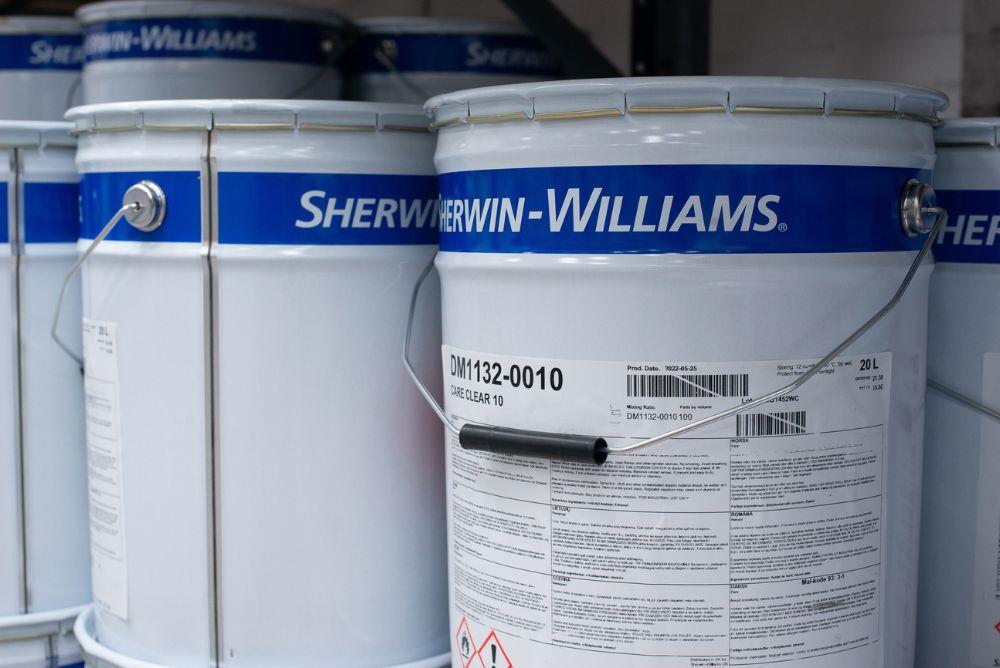
Sherwin-Williams has confirmed that the following products have been tested and meet the requirements relating to the new formaldehyde emission limits:
- DF2011-9001
- DH1002-90012
- DL2034
- DM1132-00xx
- DM394-00xx
For manufacturers already using these systems, this announcement provides reassurance that a compliant acid-catalysed solution remains available ahead of the August 2026 implementation date.
What This Means for Manufacturers
Maintaining an existing coating technology can deliver significant operational advantages, including:
- Minimal disruption to production processes
- Reduced need for retraining application teams
- Continuity of finish appearance and performance
- Avoidance of costly requalification programmes
- Greater confidence when planning for future compliance
Rather than undertaking an immediate switch to alternative technologies, manufacturers may now have the option of continuing with proven acid-catalysed systems that have been assessed against the forthcoming requirements.
Start Preparing Now
Although the deadline is still approaching, many manufacturers, specifiers and retailers are already requesting evidence of compliance with the new REACH formaldehyde restrictions. Early planning will help avoid unnecessary disruption as the implementation date approaches.
Whether you're considering water-based coatings, ultra-low emission systems or compliant acid-catalysed alternatives, now is the time to review your finishing specifications and compliance strategy.
Need Advice?
At Symphony Coatings, we are helping manufacturers navigate the upcoming changes and identify coating systems that balance compliance, performance and production efficiency.
If you'd like to discuss the suitability of any Sherwin-Williams finishing system for your application, contact our technical team for tailored advice and support.

Important Compliance Note
The test results referenced above relate to the Sherwin-Williams coating products DF2011-9001, DH1002-90012, DL2034, DM1132-0025 and DM394-0025 supplied by Sherwin-Williams Sweden and are based on testing conducted by an independent accredited laboratory in accordance with ISO 16000-9.
While these products have demonstrated formaldehyde emission levels consistent with the requirements of REACH Annex XVII Entry 77, compliance with Regulation (EC) No. 1907/2006 ultimately applies to the finished article placed on the market. Manufacturers remain responsible for assessing and verifying the compliance of their own finished products under the conditions specified in the Regulation.
